


It takes one breach. Just one.
A customer enters their card details on your checkout page. Somewhere in that transaction — between their browser and your payment processor — a piece of code that shouldn’t be there intercepts the data. The customer never knows. You don’t know either, not for weeks. And by the time the chargebacks start arriving and the fraud reports pile up, the damage is already done. Not just financially. To something harder to rebuild: trust.
This is not a hypothetical. In 2025, there were 10,500 active Magecart-style attacks running simultaneously across eCommerce platforms — a method where malicious code is quietly injected into a payment page to skim card data in real time, as transactions happen. Over 23 million online transactions were compromised through this method alone. And that’s just one type of attack, from one category of threat.
The question for any online business in 2026 isn’t whether payment security matters. It’s whether you’ve built it properly.

The threat environment is not what it was two years ago
Payment fraud has industrialised. That word — industrialised — is deliberate. What was once the work of individual hackers probing for weaknesses has become an organised ecosystem: off-the-shelf malware toolkits, fraud-as-a-service platforms, AI-generated deepfakes used for identity verification bypass, synthetic identities assembled from stolen data fragments. Impersonation fraud alone accounted for over 85% of all fraud attacks in 2025, with fraudsters using AI tools sophisticated enough to fool systems that weren’t designed to face them.
Seventy-six percent of organisations reported experiencing attempted or actual payments fraud in 2025. E-commerce platforms recorded a net fraud rate of 19.2% — nearly five times the global average across all digital transactions. And for every dollar lost to fraud, US merchants absorb a total cost impact of $4.61 once you factor in operational response, investigation, chargebacks, and reputational fallout.
These numbers don’t exist to frighten. They exist to recalibrate. Because the businesses treating payment security as an IT checkbox rather than a revenue protection strategy are the ones funding those statistics.
What secure payment infrastructure actually looks like
The good news is that the tools to build genuinely secure payment systems exist, work well, and are more accessible than they’ve ever been. The challenge is implementing them correctly and in combination.
Encryption is the baseline. Any payment solution worth using encrypts card data in transit — converting sensitive information into unreadable ciphertext the moment it leaves the customer’s device, so that anything intercepted mid-transmission is worthless without the decryption key. This is non-negotiable in 2026, not optional.
Tokenisation goes further. Rather than storing actual card numbers — even encrypted ones — tokenisation replaces sensitive data with a randomly generated token that has no intrinsic value. If your systems are ever breached, attackers find tokens, not card details. This approach also significantly reduces your PCI DSS compliance burden, because sensitive data never touches your servers in the first place.
PCI DSS compliance is the legal and operational framework tying it together. The latest version — v4.0.1, released in March 2025 — sets twelve core security requirements covering everything from network security and access control to encryption, monitoring, and incident response. Non-compliance isn’t just a risk; it’s a liability. Card brands can levy fines of up to $500,000 per incident for security breaches involving non-compliant merchants, before breach notification costs and legal fees enter the picture.
AI-powered fraud detection has become the operational layer that makes all of this real-time. Modern fraud detection systems using machine learning now reach 95% accuracy in identifying suspicious transactions, with predictive analytics flagging potential fraud patterns before they complete. Businesses that have deployed these systems report a 30% reduction in fraud losses — and, perhaps more surprisingly, a 22% increase in customer trust scores.
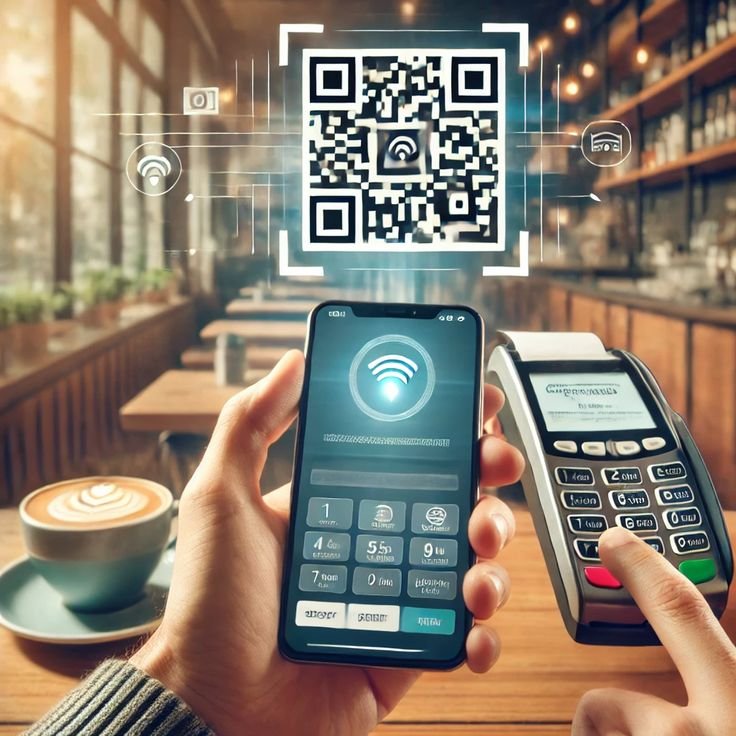
The trust signal most businesses underestimate
There’s a dimension to payment security that rarely appears in technical guides: what customers can see. Research from the Baymard Institute shows that 19% of shoppers abandon their carts specifically due to payment security concerns — not price, not shipping, not complicated checkout. Security. The presence of SSL certificates, recognised payment trust badges, clear data handling statements, and familiar payment brand logos at checkout all function as visible signals that reduce that hesitation.
This means payment security isn’t just a back-end function. It’s a conversion tool. The business that looks secure and operates securely is not just protecting revenue — it’s generating it.
The practical starting point
For online businesses building or reassessing their payment stack in 2026, the priority order is straightforward: start with a PCI DSS certified payment gateway that handles tokenisation and takes sensitive data off your own servers entirely. Layer in AI-powered fraud monitoring. Make security visible at checkout. And document everything — attestation of compliance, data processing agreements, breach notification policies.
None of this is complicated in principle. What it requires is treating payment security not as an afterthought bolted onto a working system, but as the foundation the system is built on.
The businesses that understand that distinction are the ones customers keep returning to. The ones that don’t eventually give their customers a reason to leave — and not always on their own terms.
Is your current payment setup built to handle the fraud environment of 2026 — or the one from three years ago? It’s worth checking before someone else finds out for you.










Related Posts


Stay Informed With the Latest & Most Important News
Previous Post
Next Post












-
 01Growth Mindset vs. Fixed Mindset: Understanding the Key to Personal and Professional Success
 -
 02Eco-Friendly Home Improvement Ideas: Build a Greener, Smarter Living Space
 -
 03Finding the Right Shield: Comparing AVG’s Tiered Ecosystem
 -
 04Retirement Planning Checklist: 10 Smart Steps for a Secure Future
 -
 05Beyond Salads: Hidden Vegan Gems from Around the World You Need to Try
 -
 06Dangerous Destinations: Where You Might Want to Rethink Travel Plans in 2026
 -
 072016 Is Making a Comeback in Fashion: Why the Style Cycle Is Turning Back