

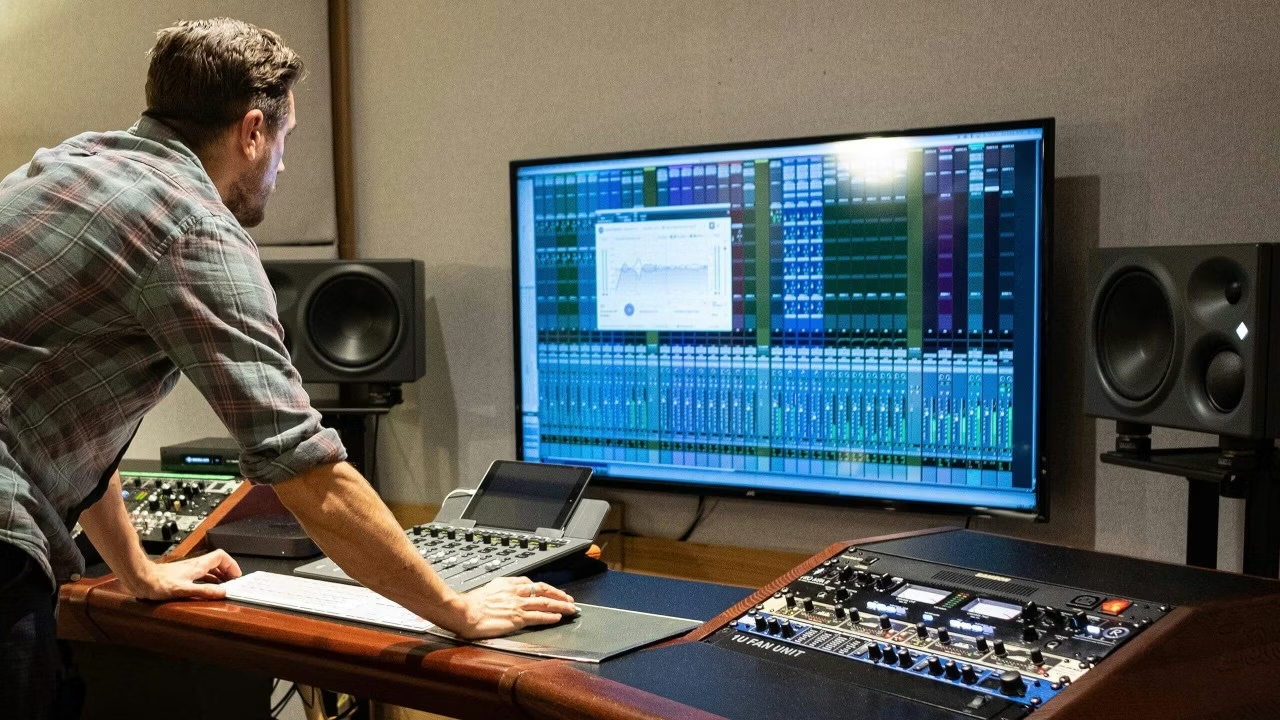
The barrier to entry for music production has never been lower, but the paradox of choice has never been higher. If you browse any music retail site or production forum today, you are instantly hit with an overwhelming wall of hardware: boutique preamps, analog synthesizers, modular rigs, and thousands of software plugins. It is incredibly easy to fall into the trap of “Gear Acquisition Syndrome,” believing that buying one more expensive tool will magically fix your mixes.
In 2026, the smartest producers are moving in the opposite direction. They are building intentional, high-efficiency setups focused entirely on workflow, accuracy, and versatility. You don’t need a million-dollar console to make a hit; you need a core group of reliable tools that tell you the truth about your sound. Whether you are building your first bedroom studio or streamlining an existing setup, here is the essential gear blueprint you should consider this year.
1. The Central Hub: A Next-Gen Audio Interface
Your audio interface is the literal bridge between the physical world and your digital audio workstation (DAW). It converts the analog electrical signal from your microphone or guitar into digital data your computer can process, and then converts it back so you can hear it through your speakers.
In 2026, you no longer need massive rack-mounted units to get pristine, professional-grade preamps and conversion. Compact, desktop-friendly units have completely taken over. Look for interfaces that offer ultra-low latency (lag), high-dynamic-range converters, and built-in onboard DSP (Digital Signal Processing). Onboard DSP is a game-changer because it allows you to run heavy processing—like vintage compressor or EQ emulations—directly inside the interface itself, freeing up your computer’s CPU and allowing you to record with zero audible delay.
2. Sonic Truth-Tellers: Studio Monitors and “Real-Room” Calibration
You cannot mix what you cannot hear. A common mistake bedroom producers make is mixing music on consumer bluetooth speakers or commercial headphones that are intentionally engineered to boost the bass and scoop the treble to make music sound more exciting. For production, you need the exact opposite: an uncolored, completely flat response.
Investing in a solid pair of 5-inch or 7-inch active studio monitors is non-negotiable. However, because most home studios are untreated bedrooms with acoustic imperfections, the sound bouncing off your walls will inherently distort what you hear.
- The 2026 Standard: The big shift this year is the widespread integration of built-in hardware room correction.
- How it Works: Modern monitors use a specialized calibration microphone to analyze your room’s specific acoustic anomalies and automatically apply an internal correction EQ profile, giving you a truthful representation of your mix regardless of your room’s shape.
3. The Human Interface: A Versatile MIDI Controller
While you can program a drum beat or click in chords using a computer mouse and keyboard, it is an incredibly tedious, uninspiring way to make music. A MIDI (Musical Instrument Digital Interface) controller is the tactile soul of your studio.
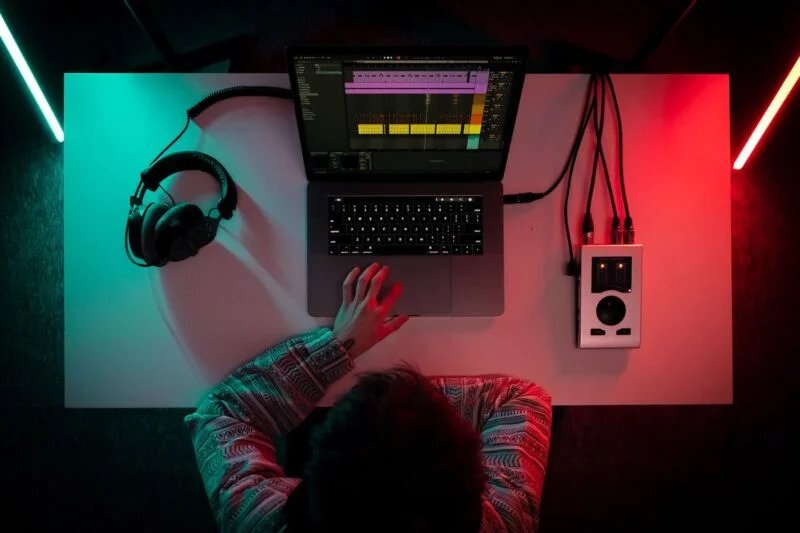
For the modern all-in-one producer, a hybrid controller is the gold standard. Look for a 49-key or 61-key controller that combines velocity-sensitive piano keys with a bank of drum pads, assignable knobs, and faders. This layout gives you the immediate flexibility to play a delicate piano melody, finger-drum a gritty hip-hop beat, and physically ride the volume faders to record organic volume automation into your tracks, bridging the gap between human emotion and digital software.
4. Acoustic Agility: Closed-Back vs. Open-Back Headphones
Even with room calibration, there will be times when you need to produce late at night without waking neighbors, or isolate sound while tracking a live vocalist. A serious producer in 2026 should utilize a two-pronged headphone strategy:
| Headphone Type | Best For | Structural Characteristic |
| Closed-Back | Recording vocals, tracking instruments, isolating noise | Sealed earcups prevent sound from bleeding into a live microphone |
| Open-Back | Critical mixing, sound staging, long production sessions | Perforated earcups allow air to pass, creating a wider, more natural stereo field |
Final Thoughts: Invest in Your Workflow
Ultimately, the best piece of gear in any studio is a creative mind that knows its tools inside and out. Don’t waste your resources buying dozens of redundant gadgets that look impressive on a desk but clutter your cognitive bandwidth. Prioritize a pristine interface, a truthful monitoring setup, a tactile controller, and accurate headphones. By building a clean, highly functional toolkit, you eliminate technical friction, protect your ears, and create a seamless environment where your musical ideas can flow from your head to the speakers without getting lost in the wires.










Related Posts

Stay Informed With the Latest & Most Important News
Previous Post
Next Post











-
 01Top Budget Shopping Apps
 -
 02Taylor Stitch: Timeless Men’s Clothing Built for the Long Haul
 -
 03How Namecheap Makes Website Hosting Easier for Beginners
 -
 04Why Plant-Based Food Is Becoming More Mainstream
 -
 05From Idea to Online Brand: The 2026 Blueprint for Building a High-Converting Website
 -
 06Healthy Foods That Actually Taste Great
 -
 07Krisp: Making Online Meetings Clearer, Smarter, and More Productive