


Not long ago, planning a trip meant browser tabs. Dozens of them.
One for flights. Another to compare hotels. A third for activities. A fourth to figure out how to get from the airport to the hotel without getting into a taxi that charges three times the going rate. By the time you’d stitched everything together — different booking references, different cancellation policies, different customer service numbers — you’d spent more time planning the trip than you’d spend on it.
The digital travel industry was supposed to fix this. And it did — partially. What it actually did, for a long time, was create a more efficient version of the same fragmentation. Better tools, same scattered picture.
That’s the gap that the best platforms in 2026 are finally closing.
What Agoda does well — and where it stops
Agoda is one of Asia’s most trusted accommodation platforms, and for good reason. It operates under Booking Holdings, covers over 30 countries, supports 38 languages, and has spent years building inventory depth across Asia that few Western platforms can match. If you need a hotel in Bangkok, Kuala Lumpur, or Hanoi and you want competitive pricing with genuine regional coverage, Agoda delivers.
But accommodation is where it starts and largely where it ends. Agoda tells you where you’ll sleep. It doesn’t particularly care what happens after you put your bags down. Activities, attractions, transfers, experiences — these exist at the margins of the platform, not at its centre. For a traveller who books hotels frequently and wants loyalty rewards that convert into airline miles, Agoda’s PointsMAX system is genuinely clever. For a traveller who wants to plan an entire trip without opening another app, it’s an incomplete picture.
What Klook does well — and where it stops
Klook flips the model. Founded in Hong Kong in 2014, it’s built its identity entirely around the experience layer — the things you do rather than where you sleep. Over 490,000 experiences across more than 1,000 destinations. Theme park tickets. Day tours. Airport transfers. Local food walks. Train passes. The kind of inventory that used to require a local travel agent or a lot of prior research, now accessible in a few taps.
For activities specifically, Klook is among the best platforms in the region. If you’re standing in Tokyo trying to book a Shinkansen pass or looking for a last-minute cooking class in Chiang Mai, it’s the first app most travellers reach for.
But again — accommodation coverage is limited. Flights are not its strength. And when the trip involves multiple moving parts across several days and cities, you’re back to the same problem: switching between platforms, reconciling booking references, managing separate cancellation timelines.
Both Agoda and Klook are excellent at what they’ve chosen to be. Neither is built to be everything a trip requires.
What a real all-in-one platform actually looks like
This is where Traveloka enters the picture — and where the word “all-in-one” stops being a marketing claim and becomes a literal description of how the platform works.
Founded in Indonesia in 2012, Traveloka now has over 140 million app downloads, more than 40 million monthly active users, and operations across eight markets: Indonesia, Malaysia, Thailand, Vietnam, the Philippines, Singapore, Australia, and — as of May 2025 — Japan. The Japan launch is a useful signal: Traveloka’s EPIC Sale in Japan during April–May 2025 produced a 50% increase in transactions compared to the prior fortnight. New market, established playbook, immediate results.
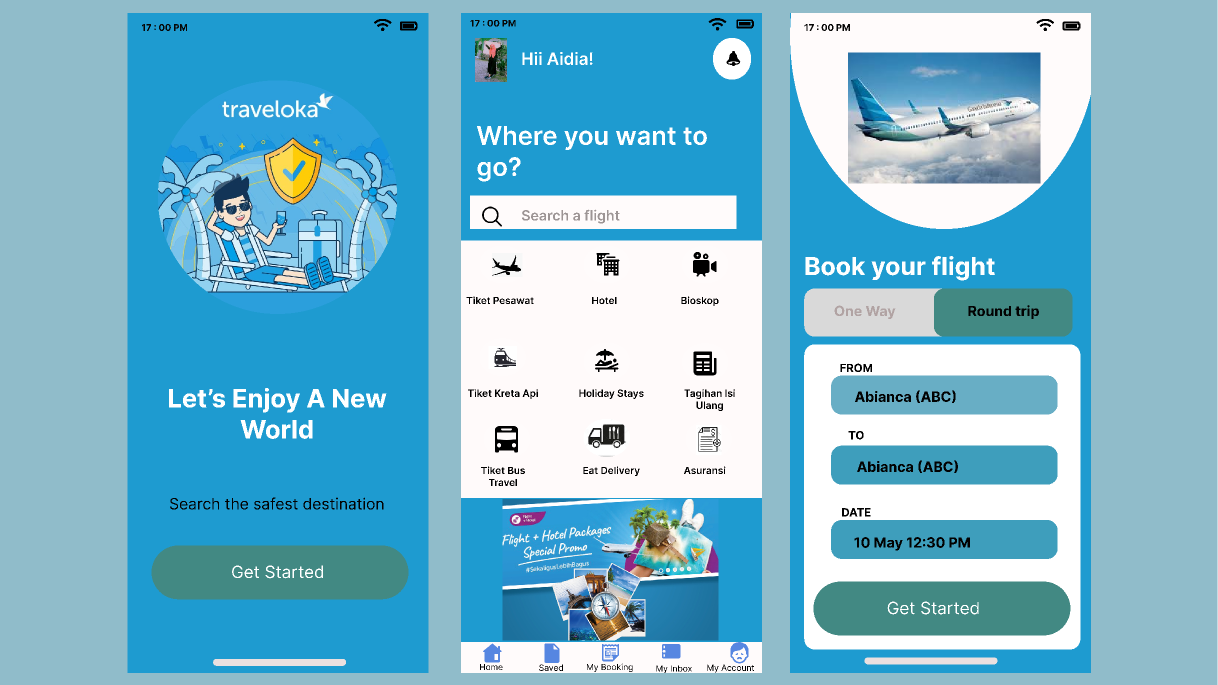
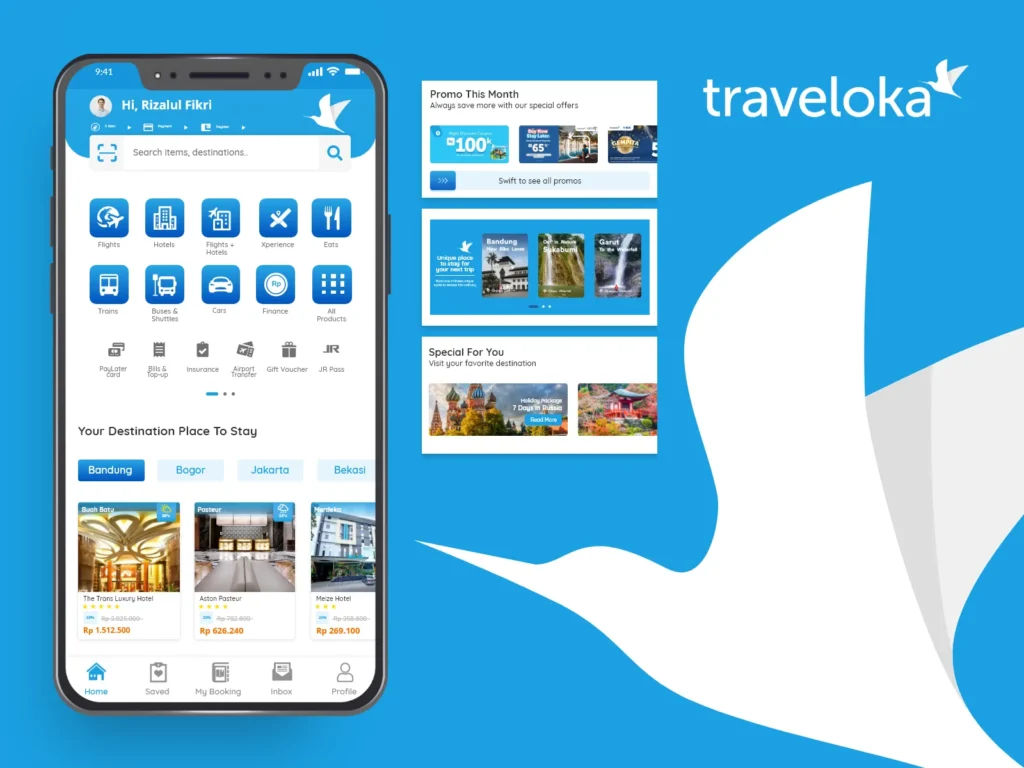
What the platform offers is not a hotel product and an activities product sitting next to each other under one logo. It’s over 20 travel products — flights, hotels, activities, attractions, airport transfers, car rentals, train tickets — built into a single booking flow, with unified pricing, a single payment process, and one customer support line. Book a flight from Jakarta to Singapore, add a hotel, lock in tickets to the Gardens by the Bay and a transfer from Changi, pay once, receive one itinerary. That’s what removing fragmentation actually looks like.
The depth of inventory matches the breadth. Over 2.2 million accommodations across more than 100 countries. Partnerships with Singapore Tourism Board for curated off-the-beaten-path experiences. A live campaign with the Tourism Authority of Thailand for Northern Thailand’s wellness and cultural destinations through March 2026 — offering 15% off hotels and activities booked directly through the app. Stackable discount coupons across flights, hotels, and activities. A Best Price Guarantee that doesn’t require a separate search to verify.
The part that changes how trips actually feel
Here’s what genuinely separates a platform like Traveloka from a collection of specialist tools: when everything lives in one place, the decision-making changes.
You stop optimising each component in isolation — the cheapest flight, then the best-reviewed hotel, then the most-booked activity — and start planning the trip as a whole. The spontaneous weekend to Singapore. The cultural deep-dive in Chiang Mai. The first-timer’s itinerary through Japan. These trips have a shape, and a platform built around the whole trip helps you see that shape before you book, not after you’ve already committed to three different apps.
That’s what a world of experiences awaiting actually means. Not a list of products. An entire trip, planned once, in one place, by someone who knows the region the way only a platform built here from the ground up can.
Plan your next trip at traveloka.com — flights, hotels, activities, transfers and more. One app. One booking. One less reason to stress.










Related Posts


Stay Informed With the Latest & Most Important News
Previous Post
Next Post












-
 01The Growing Importance of Online Payment Infrastructure in 2026
 -
 02Upstart Personal Loans: A Convenient Way to Explore Your Borrowing Options
 -
 03How to Compare Flights, Hotels & Car Rentals to Get the Best Travel Deals
 -
 04Bus Travel vs Train Travel in the USA: Which Is More Affordable?
 -
 05Omio vs Rail Europe: Smart Ways Travelers Are Planning Rail Journeys in 2026
 -
 06The Ultimate Guide to Affordable Gaming and Streaming Subscriptions
 -
 07Beyond Salads: Hidden Vegan Gems from Around the World You Need to Try