
The Dual Pillars of Radiant Skin: The Vital Roles of Hydration and Nourishment


In the ever-evolving world of skincare, we are constantly bombarded by marketing campaigns championing the latest complex active ingredients. From high-potency retinoids and chemical exfoliants to viral peeling solutions, the modern consumer is led to believe that achieving flawless skin requires a constant cycle of intense resurfacing treatments.

However, in this pursuit of a quick cosmetic fix, we often lose sight of fundamental biology. Your skin is a living, cellular organ, not a static canvas. Before it can successfully process advanced anti-aging or brightening compounds, its core biological needs must be met. Those needs rest entirely on two distinct, non-negotiable pillars: hydration and nourishment. While these terms are routinely used interchangeably by beauty brands, they represent completely different physiological mechanisms. Understanding and balancing this duo is the absolute secret to long-term skin health.
1. Deconstructing Hydration: Water is the Infrastructure
When we talk about hydration in skincare, we are talking strictly about water content within the skin cells, specifically within the deeper layers of the epidermis. Think of your skin cells like plums: when they are fully saturated with water, they are plump, bouncy, and smooth, reflecting light evenly to create that natural, healthy glow. When they are dehydrated, they shrivel into prunes, leading to a dull complexion, fine lines, and a loss of elasticity.
To effectively hydrate the skin from the outside in, you must utilize humectants—water-binding ingredients that act like microscopic sponges, pulling moisture from the atmosphere directly into the skin matrix.
[Hydration / Water Content] ──> Plumps cells, smooths lines, creates radiance.
[Nourishment / Lipid Barrier] ──> Seals water in, shields against irritants.
The most powerful humectant in modern skincare is hyaluronic acid, which can hold up to one thousand times its weight in water. Other brilliant hydrators include glycerin, aloe vera, and beta-glucan. However, surface hydration is incredibly fleeting. If you do not lock that water down, it will quickly evaporate into the air via a process known as transepidermal water loss (TEWL), leaving your skin drier than it was before.
2. Deconstructing Nourishment: Lipids Are the Shield
This is where nourishment steps in. While hydration is about water, nourishment is entirely about oil and lipids. Nourishing the skin means feeding the stratum corneum—the outermost layer of the skin barrier—with essential fatty acids, ceramides, and cholesterol.
Your skin barrier is often described using a “bricks and mortar” analogy. The skin cells are the bricks, and the natural lipids are the mortar holding them together. A well-nourished skin barrier forms a tight, waterproof shield. It does two critical things: it seals your precious hydration inside, and it prevents external irritants, bacteria, and pollution from penetrating the skin and triggering chronic inflammation. To nourish the skin, look for biomimetic plant oils like squalane, jojoba oil (which closely mirrors our skin’s natural sebum), and rosehip seed oil, alongside rich lipid creams containing ceramides.
The Symbiotic Dynamic: Spotting the Imbalance
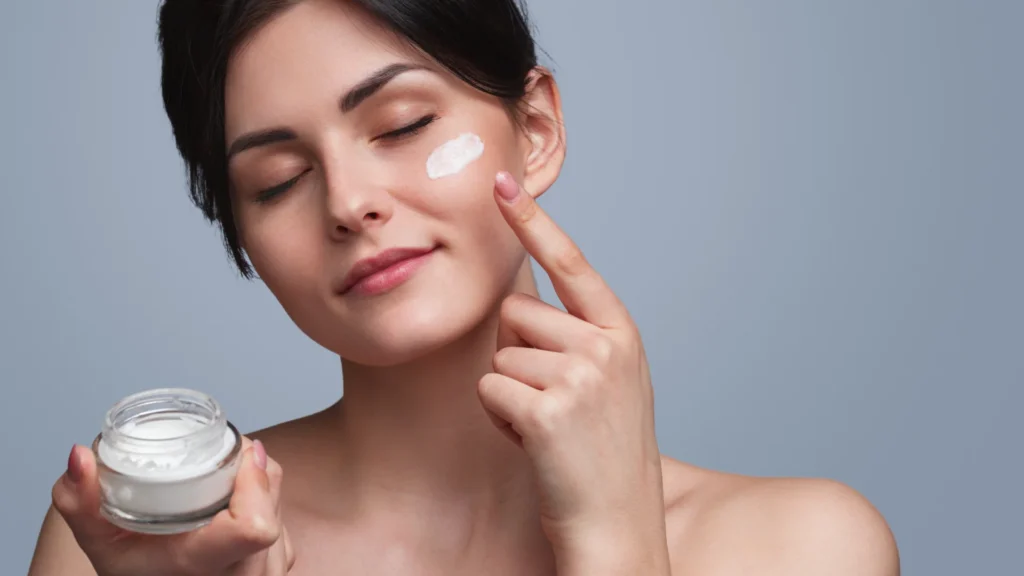
Achieving a balanced complexion requires diagnosing which pillar your current routine is lacking. Because companies mix up the terminology, consumers often treat the wrong issue:
- Dehydrated Skin (Lacks Water): Feels tight, looks dull, shows fine paper-like crinkles when compressed, and can actually overproduce oil to compensate for the lack of water. If this is you, loading up on heavy oils won’t help; you need lightweight, watery layers of humectants.
- Dry Skin (Lacks Oil/Nourishment): Flakes easily, feels rough or coarse to the touch, and rarely experiences breakouts or oil production. If this is you, applying pure water gels will feel soothing for a minute, but the moisture will instantly vanish without a rich oil layer to anchor it.
Final Thoughts: Building a Resilient Canvas
Ultimately, advanced anti-aging serums and corrective treatments are completely useless if your skin is chronically dehydrated or undernourished. A compromised skin barrier cannot properly defend itself or heal. By stepping back from hyper-aggressive routines and prioritizing a simple cycle of water-binding hydration followed by an oil-locking nourishing barrier, you restore your skin’s natural cellular function. Treat your skin like a living ecosystem. Give it the water it craves and the protective lipids it needs, and it will naturally reward you with a resilient, timeless radiance.










Related Posts

Stay Informed With the Latest & Most Important News
Previous Post
Next Post












-
 01Essential Activewear Pieces for Every Fitness Wardrobe
 -
 02Hostinger: A Simple Way to Build and Grow Your Online Presence
 -
 03Best Online Marketplaces for Buying and Selling Musical Instruments
 -
 04How to Pose People Who Are Not Models for Natural and Authentic Portraits
 -
 05New Study Reveals Simple Lifestyle Changes Linked to Longer Life
 -
 06A Journey to Sri Lanka: The Pearl of the Indian Ocean
 -
 07The Ultimate Skincare Routine for Every Skin Type