

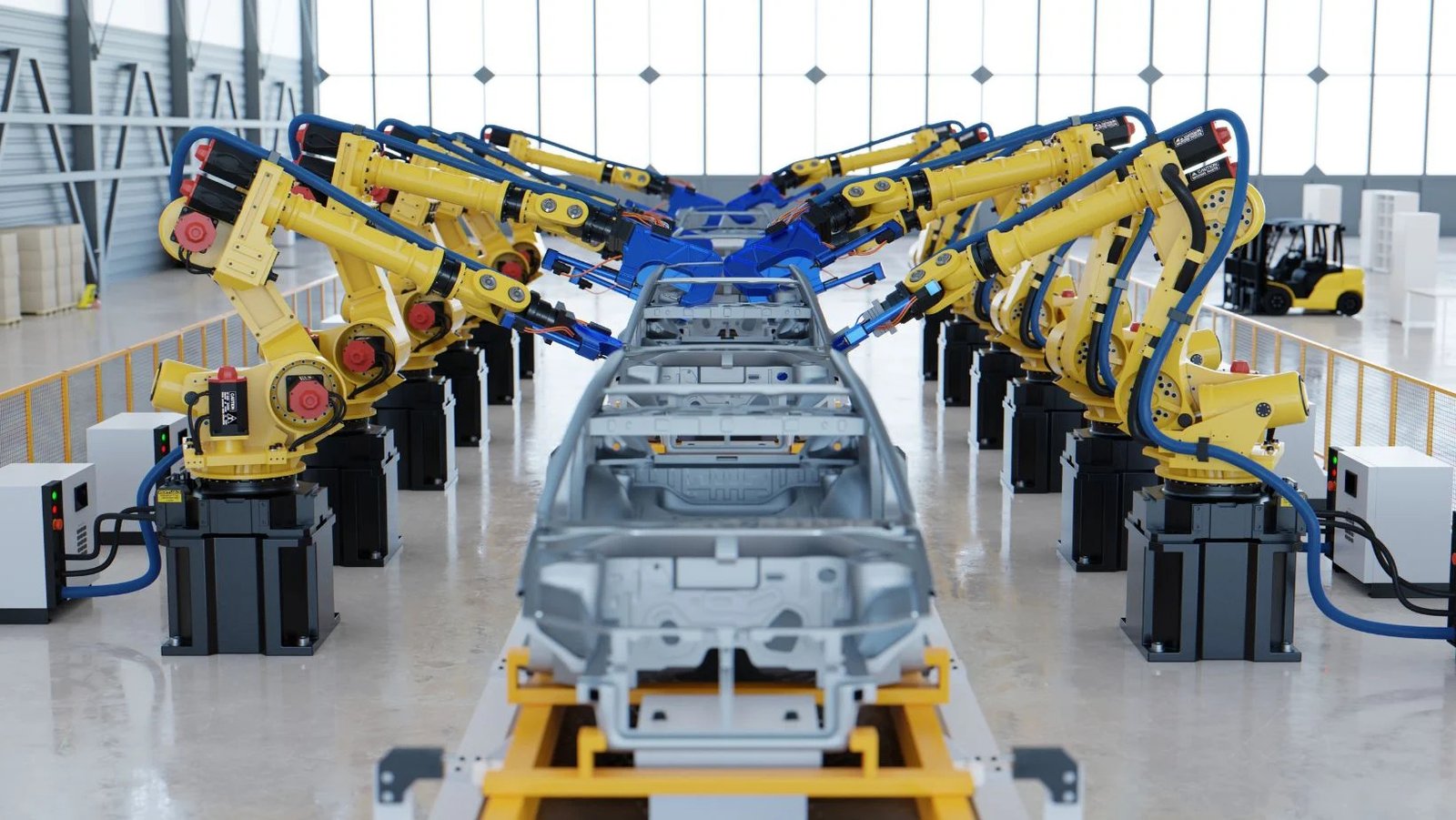
The manufacturing of robots is a fascinating blend of mechanical engineering, electronics, materials science, and advanced software development. What once belonged to science fiction is now a rapidly expanding global industry, powering sectors from automotive production to healthcare and space exploration. Companies like Boston Dynamics, ABB, and Fanuc are leading the way in developing highly capable robotic systems that transform modern industry.
1. Concept and Design
Robot manufacturing begins with a clear purpose. Engineers first define what the robot is meant to do—weld car frames, assist in surgery, explore disaster zones, or deliver packages. For example, industrial robotic arms used in automotive plants must be precise, durable, and capable of operating continuously.
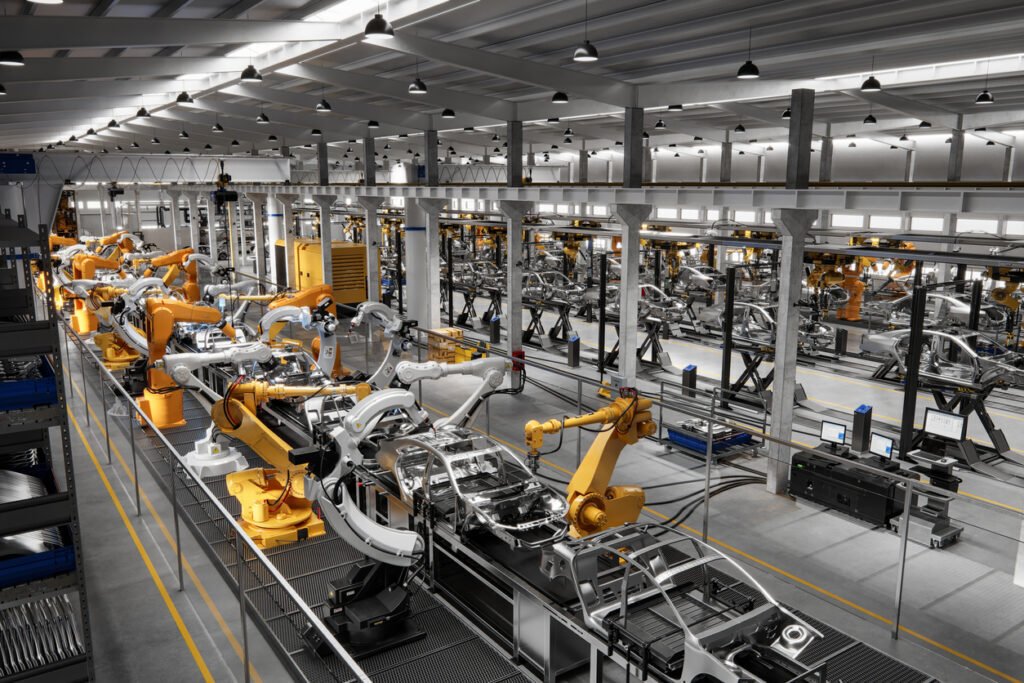
Designers use Computer-Aided Design (CAD) software to create detailed 3D models. They determine joint placements, motor sizes, load capacities, and overall structural integrity. At this stage, simulations are run to test movement ranges, stress tolerance, and safety factors. Prototyping may involve 3D printing parts to evaluate form and function before mass production.
2. Mechanical Fabrication
Once the design is finalized, mechanical components are manufactured. These include:
- Structural frames (often aluminum or steel)
- Gears and actuators
- Bearings and joints
- End effectors (grippers, welders, suction tools)
Precision machining plays a crucial role. Components must fit together perfectly to ensure smooth motion and long-term reliability. In high-performance robots like those developed by KUKA, tolerances are extremely tight to achieve consistent accuracy.
Additive manufacturing (3D printing) is increasingly used for lightweight or customized parts, especially in research and specialized robotics. This reduces material waste and accelerates innovation cycles.
3. Electronics and Control Systems
A robot’s intelligence depends on its electronics. After mechanical assembly, engineers integrate:
- Microcontrollers and processors
- Sensors (cameras, LiDAR, force sensors, proximity detectors)
- Power systems (batteries or direct electrical supply)
- Communication modules
Sensors allow robots to perceive their environment. For example, vision systems enable robotic arms to identify objects on a conveyor belt, while force sensors ensure delicate handling.
Circuit boards are carefully designed and tested for durability, especially in industrial environments where heat, dust, and vibration are common. Wiring and cable management are crucial to prevent signal interference or mechanical strain during movement.
4. Software Integration
Hardware alone does not make a robot functional. Software gives it intelligence and autonomy. Engineers program control algorithms that manage movement, balance, and task execution.

Modern robots often use artificial intelligence and machine learning frameworks. Companies like Tesla are integrating advanced AI into humanoid robotics, enabling machines to interpret complex environments and adapt to new situations.
Programming languages such as Python, C++, and specialized robotic frameworks like ROS (Robot Operating System) are commonly used. Before deployment, extensive simulation testing ensures the robot behaves safely and efficiently.
5. Testing and Quality Assurance
Testing is one of the most critical stages in robot manufacturing. Each unit undergoes performance checks to verify:
- Motion accuracy
- Load handling capacity
- Sensor calibration
- Safety compliance
Industrial robots must meet international safety standards before entering factories. Stress tests simulate years of operation to detect potential failures early.
In collaborative robots (cobots), additional safety testing ensures safe interaction with humans. These robots are designed to stop automatically if they detect unexpected contact.
6. Assembly and Deployment
After passing quality checks, robots are assembled completely and prepared for shipment. Industrial robots may be integrated into larger automated systems before delivery.

Installation at the customer site involves calibration, programming adjustments, and integration with existing workflows. Training operators is also an essential part of deployment.
The Future of Robot Manufacturing
Robot manufacturing is evolving rapidly with advancements in AI, materials science, and automation. Smart factories now use robots to build other robots, creating a cycle of increasing efficiency and precision.
As demand grows in healthcare, logistics, agriculture, and domestic applications, manufacturers continue refining production methods to lower costs while enhancing performance. The future may bring self-learning robots capable of repairing or even reproducing certain components autonomously.
From initial concept sketches to intelligent machines performing complex tasks, robot manufacturing represents one of the most exciting intersections of human creativity and technological innovation.










Related Posts
Stay Informed With the Latest & Most Important News
Previous Post
Next Post












-
 01Why Zelle & Modern Payment Apps Are Becoming Essential for Everyday Spending
 -
 02How to Save on Groceries Without Sacrificing Quality or Freshness
 -
 03The Manufacturing of Robots: From Concept to Intelligent Machines
 -
 04Finding the Right Shield: Comparing AVG’s Tiered Ecosystem
 -
 05The DIY Concept: Creativity, Independence, and the Joy of Making Things Yourself
 -
 06Elevate Your Rotation: The Best Fabletics Outfits for Gym, Yoga, and Everyday Wear
 -
 07Best Beach Destinations Around the World