


Travelling across the United States offers countless opportunities to explore vibrant cities, scenic landscapes, and charming small towns. However, choosing the right mode of transportation can make a significant difference to your travel budget. Buses and trains are popular alternatives to driving or flying, but which option offers better value for money?
The answer depends on your destination, travel dates, comfort preferences, and schedule. While buses are often the more affordable choice for intercity journeys, trains can offer additional comfort and convenience on certain routes. Understanding the differences can help you plan a trip that suits both your budget and travel style.
1. Ticket Prices: Which Option Costs Less?
For many intercity routes in the USA, buses are generally the more budget-friendly option. Operators such as Greyhound and FlixBus offer services connecting selected cities, often with competitive advance-purchase fares.
Train tickets, particularly on Amtrak services, can cost more depending on the route, departure time, and demand. However, train fares vary considerably, and booking early can help travellers find better deals.
For example, a journey between nearby major cities may be available at a lower price by bus than by train. On the other hand, some train routes offer promotional fares that make rail travel competitive.

The best approach is to compare prices for your exact journey and date rather than assuming one option is always cheaper.
2. Travel Time and Convenience
Ticket prices are important, but travel time also affects the overall value of your journey.
Buses may take longer on certain routes because of road traffic, roadworks, and scheduled stops. Journeys can be particularly unpredictable around major metropolitan areas during busy periods.
Trains operate on dedicated tracks and can provide a smoother journey, although delays and service disruptions are still possible. Some rail routes also offer convenient connections between city centres, reducing the need for additional transport.
Before booking, compare the complete journey duration, including transfers and the time required to reach the departure station.
3. Comfort and Onboard Facilities
Comfort can influence how enjoyable a long-distance journey feels. Both buses and trains offer seating, but the onboard experience varies by operator, route, and vehicle.
Many intercity coaches provide reclining seats, air conditioning, and, on selected services, Wi-Fi, power outlets, and onboard restrooms.
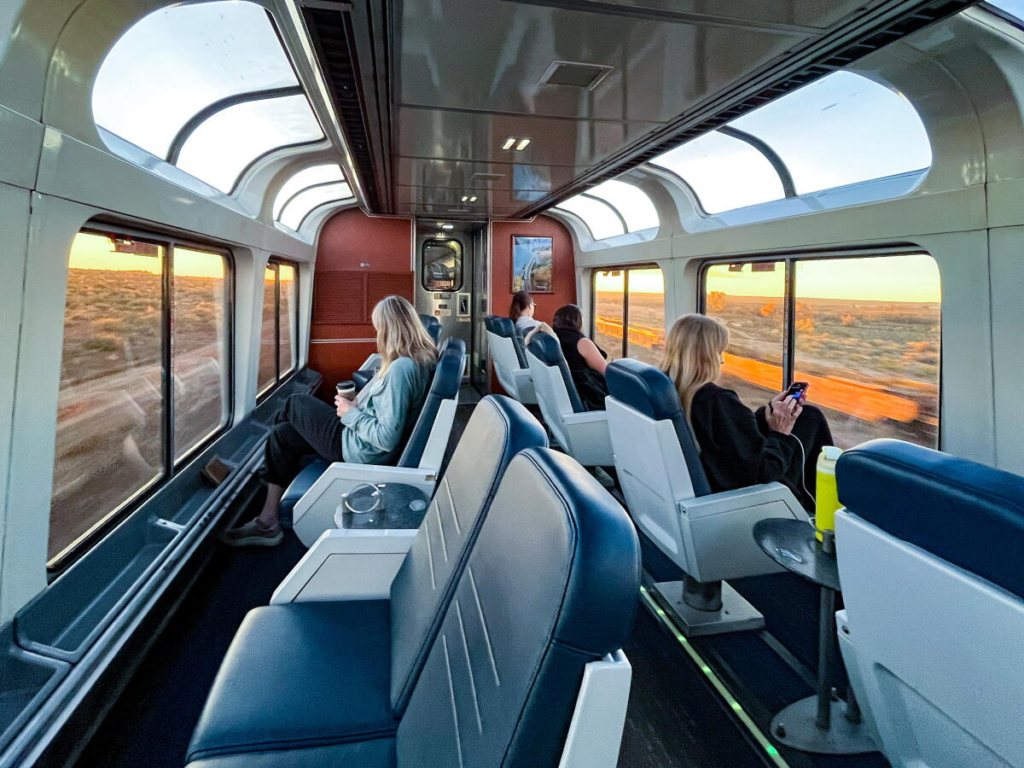
Amtrak trains may offer more opportunities to move around, stretch your legs, and enjoy changing landscapes through larger windows. Some routes also provide dining services or additional seating space, depending on the train and ticket class.
If you are travelling for several hours, consider whether the extra comfort of a train is worth the difference in ticket price.
4. Luggage and Additional Costs
The advertised ticket price does not always represent the total cost of travel. Both buses and trains have luggage policies, and the allowances depend on the operator, route, and fare conditions.
Check whether your ticket includes checked baggage, carry-on items, or additional luggage. If you are travelling with several bags, compare any applicable fees before making a decision.
Also consider the cost of reaching your departure point and continuing from your arrival station. A cheaper ticket may not offer the best overall value if you need to pay significantly more for local transportation.
5. Which Option Is Better for Different Trips?
Choose a bus when:
- Your main priority is finding a low-cost ticket.
- You are travelling between cities with convenient coach connections.
- Your schedule is flexible enough to accommodate a longer journey.
- You are planning a short trip and want to minimise transportation expenses.
Consider a train when:
- You value extra space and the ability to move around.
- The route offers convenient city-centre stations.
- You want to enjoy scenic rail journeys.
- Advance fares or promotions make the total cost competitive.
Neither option is automatically better for every traveller. Your itinerary and priorities should guide your decision.
6. Tips for Saving Money on Both
Book tickets early, compare several departure times, and travel during less busy periods when possible. Check official operator websites for promotions and review cancellation policies before purchasing.
If your plans involve multiple destinations, compare separate tickets with any available travel passes. Always calculate the complete cost, including local transport and baggage fees.
Final Thoughts
Bus travel is often the more affordable choice for exploring the USA, especially when low ticket prices are your main priority. Train travel, however, can offer greater comfort and convenience on selected routes, making it worth considering when the fare difference is small.
Compare prices, journey times, facilities, and additional expenses before deciding. By choosing the option that best matches your itinerary and budget, you can enjoy your American adventure without spending more on transportation than necessary.










Related Posts



Stay Informed With the Latest & Most Important News
Previous Post
Next Post












-
 01Simple Ways to Reduce Stress in Daily Life
-
 02A Journey to Sri Lanka: The Pearl of the Indian Ocean
-
 03Active Learning vs. Passive Learning: Which Is Better?
-
 04Traditional Dishes Every Food Lover Should Experience
-
 05Best Furniture for Creating a Stylish and Comfortable Home in 2026
-
 06Travel Smarter: Easy Ways to Cut Costs on Your Next Trip
-
 07How to Enjoy a Stress-Free Bus Journey on Your Next UK Trip