
Strengthening Strategic Ties: Prime Minister Narendra Modi’s Landmark Visit to Israel

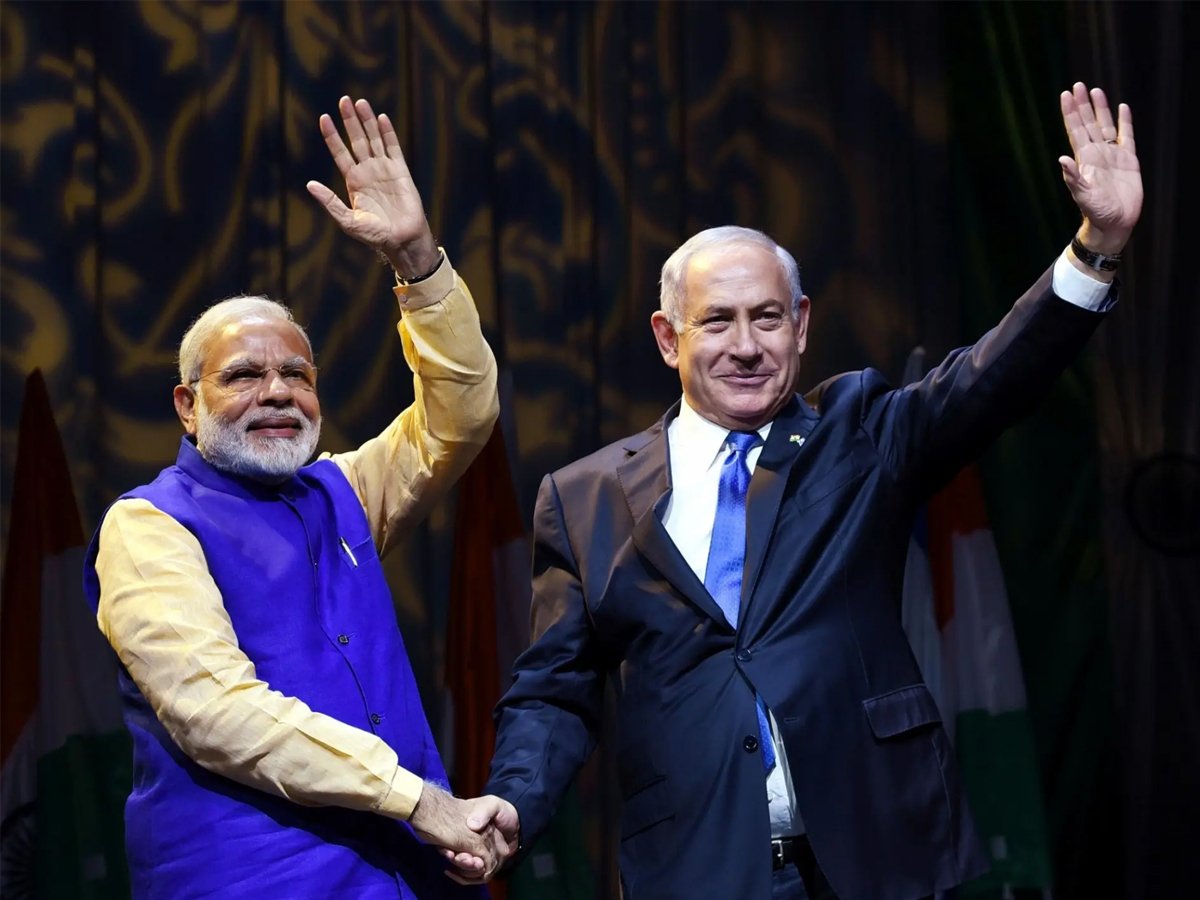
In February 2026, Narendra Modi undertook a significant state visit to Israel, reinforcing a relationship that has steadily evolved into one of India’s most strategic international partnerships. The two-day visit, hosted by Israeli Prime Minister Benjamin Netanyahu, was marked by symbolism, substance, and a clear message: India and Israel intend to deepen cooperation across defence, technology, trade, and innovation while advocating stability in a turbulent region.

A Historic Address at the Knesset
One of the defining moments of the visit was Prime Minister Modi’s address to the Knesset, Israel’s parliament. In his speech, he emphasized shared democratic values, innovation-led growth, and the importance of global peace. Importantly, he stated that no cause justifies the killing of civilians, a remark widely interpreted as a call for restraint and humanitarian sensitivity amid ongoing regional tensions.
The address symbolized how far bilateral ties have come. Diplomatic relations between India and Israel were formally established in 1992. Since then, cooperation has expanded significantly, particularly in defence and agriculture. However, the warmth and visibility of engagement in recent years signal a new level of strategic trust.
Paying Tribute at Yad Vashem
During the visit, Prime Minister Modi paid homage at Yad Vashem, Israel’s official memorial to the victims of the Holocaust. The solemn tribute highlighted India’s respect for Jewish history and suffering, while also reinforcing shared commitments to remembrance and combating hatred in all forms. Such gestures carry deep diplomatic meaning, strengthening people-to-people bonds alongside political ties.
Strengthening Strategic Cooperation
Defence remains one of the cornerstones of the India–Israel partnership. Over the past decades, Israel has emerged as one of India’s key defence suppliers, providing advanced systems and technology. The visit included discussions on expanding defence collaboration, joint production initiatives, and potential technology transfers. These conversations reflect India’s broader push for self-reliance in defence manufacturing under its “Make in India” initiative.
Beyond defence, innovation and technology were central to the agenda. Israel is widely recognized as a global startup hub, and collaboration in artificial intelligence, cybersecurity, water management, and agricultural technology featured prominently in bilateral talks. Prime Minister Modi visited technology exhibitions and encouraged Israeli firms to invest in India’s fast-growing digital and manufacturing ecosystems.
Water conservation and agricultural innovation are particularly relevant areas of cooperation. Israeli drip irrigation technologies and arid-zone farming techniques have already benefited Indian farmers in several states. Expanding these partnerships could help address climate-related challenges and food security concerns.
Trade and Economic Opportunities
Economic ties between the two nations have grown steadily, with bilateral trade spanning diamonds, chemicals, pharmaceuticals, electronics, and defence equipment. Discussions during the visit reportedly included progress toward a potential Free Trade Agreement (FTA), which could unlock new market access and investment opportunities.
For India, deeper economic engagement with Israel aligns with its ambition to become a global manufacturing and innovation hub. For Israel, India represents a vast and dynamic market with immense growth potential.
Navigating Geopolitical Sensitivities
The visit also unfolded against a complex geopolitical backdrop. Ongoing tensions in the Middle East have drawn global attention, and India has historically maintained strong ties with both Israel and Palestine. Prime Minister Modi’s messaging during the visit underscored India’s balanced diplomatic approach — strengthening relations with Israel while reiterating support for dialogue, peace, and a two-state solution.
This balancing act reflects India’s broader foreign policy strategy: engage widely, maintain strategic autonomy, and prioritize national interest while advocating global stability.
A Partnership for the Future
Prime Minister Modi’s visit to Israel was not merely ceremonial; it was forward-looking. It demonstrated the maturity of a partnership built on shared democratic values, technological ambition, and strategic cooperation. From defence innovation to agricultural resilience and digital transformation, the India–Israel relationship continues to diversify and deepen.
As both nations navigate a rapidly changing global landscape, this visit reaffirmed their commitment to working together — not only for mutual prosperity but also for broader regional and global stability.










Stay Informed With the Latest & Most Important News
Previous Post
Next Post










-
 01Celebrities Making Headlines with Climate Activism and Awareness
 -
 02The EV Revolution: How Electric Cars Are Taking Over the Roads
 -
 03The Manufacturing of Robots: From Concept to Intelligent Machines
 -
 04The Future of Wearable Tech: Ray-Ban AI Glasses Explained
 -
 05Top Tips to Stay Motivated and Avoid Burnout While Working Remotely
 -
 06Banaras: A Timeless Journey Through India’s Spiritual Heart
 -
 07Online Clothing Shopping: Convenience, Choice, and the Future of Fashion